

Winter sports guide: Dressing for movement as well as warmth
Winter sports guides usually start with temperature charts and gear lists.
That’s helpful, but it lacks the facts that determine whether you’ll stay comfortable on our outings, or end your day cold, damp, and depleted. Instead of heading straight to packing lists, start by exploring how your body moves in each winter sport and what winter conditions the sport is practiced in.
Over decades of designing (and wearing) cold-weather clothing in Iceland, Icewear has found that one truth is crystal clear: warmth alone is not enough. The difference between comfort and failure is how your clothing performs across changing output levels, including:
When you generate heat consistently
When you stop moving and lose that heat
When wind cuts through layers
And when moisture from sweat works against you
This winter sports guide is organized around the movement and the environments that are characteristic of your favorite winter sports. The goal is to help you understand how winter actually works on the body so you can stay warm and well—all without sacrificing movement.
Winter sports with continuous, high-output movement#
In winter sports where heat is generated consistently, the greatest risk of cold and discomfort lies in getting too wet with sweat. This can happen from over-layering or from choosing the wrong materials, which disrupt proper evaporation.
These winter sports are for enthusiasts who know what it feels like to start cold and warm up fast. You’re part of the club if you accept the first ten minutes of cold as a price of comfort later.
These sports demand clothing that can move heat and moisture away from the body, resist wind without trapping excess warmth, and allow full and repetitive motion over long distances or durations.
Cross-country skiing#
Cross-country skiing includes track skiing and backcountry touring across open plateaus. It’s aerobic and sustained, with few true breaks once movement begins. Unlike downhill skiing, the skier is responsible for nearly all heat generation, and wind exposure can change fast based on terrain, increasing convection (the loss of heat from your body to the air around you).
In Iceland, cross-country skiing is a popular sport and a practical winter travel skill in parts of the country. Large, open landscapes leave skiers exposed to wind for extended periods, and weather shifts rapidly. Icewear designs its ski gear accordingly to give you all the options you need.
Cross-country skiing takes place in open terrain, forests, plateaus, and rolling hills.
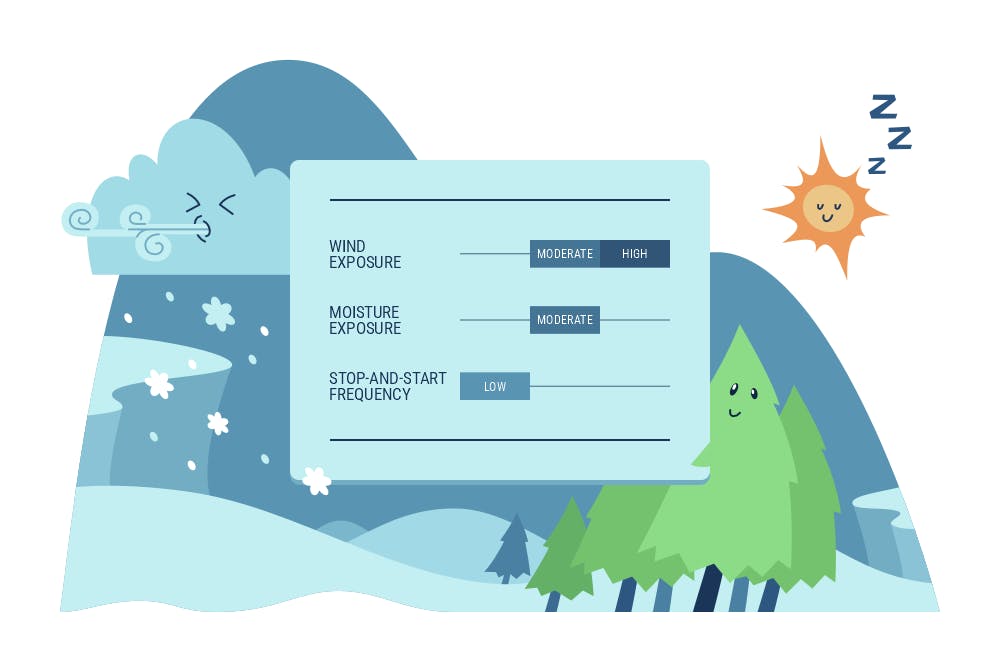
Icewear insight: Overdressing leads to rapid chilling once sweat builds; breathability is critical.
Speed skating#
You’ll see outdoor speed skaters on frozen lakes, natural ice tracks, and large outdoor rinks. In these environments, wind is a defining factor of your experience. The movement of speed skaters is powerful and continuous, which generates lots of heat through conduction. But then, even brief winds can dramatically affect perceived temperatures.
Speed skating takes place on frozen lakes, outdoor rinks, and on open ice.
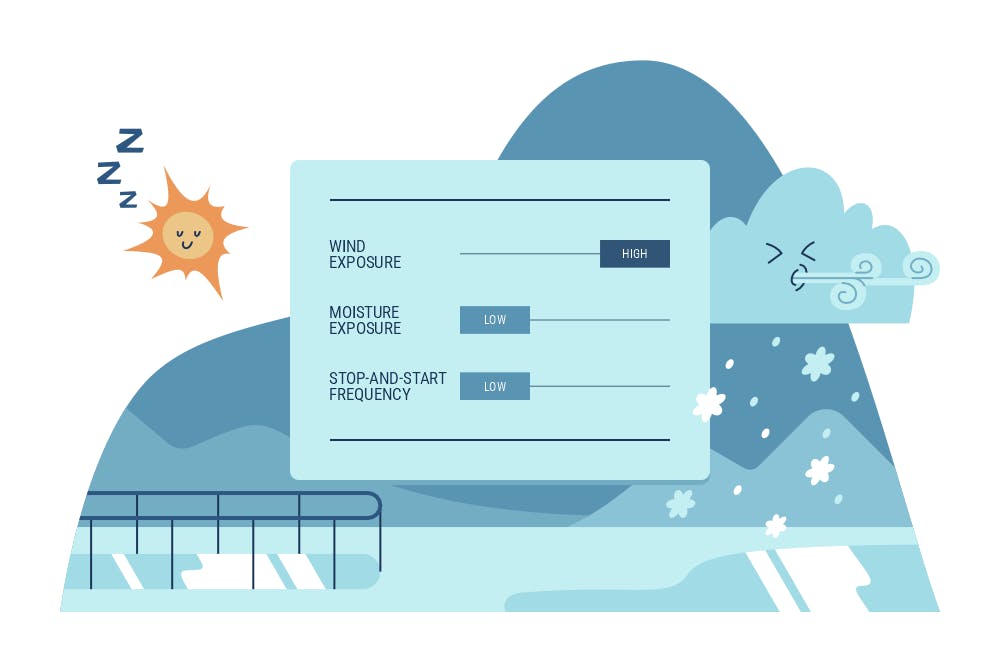
Icewear insight: Wind resistance matters more than insulation weight at high speeds.
Snowshoeing#
Snowshoeing isn’t popular everywhere (you’re unlikely to see it in Iceland, for example), but in parts of the world where it’s popular, it’s a practical skill as well as a recreational pastime. At higher intensities, snowshoeing becomes a steady and full-body effort that generates major heat, especially on inclines. Contact with snow is frequent, creating additional heat loss through conduction, however staying still for long bouts is rare.
In Iceland, snowshoeing sometimes replaces winter hiking, especially in volcanic or mixed terrain where trails are less defined. The emphasis for proper clothing here is on proper evaporation and adaptability so you can move freely and stay on the move instead of stopping to constantly adjust layers.
Snowshoeing takes place on snow-covered trails, rolling hills, and on volcanic terrain.
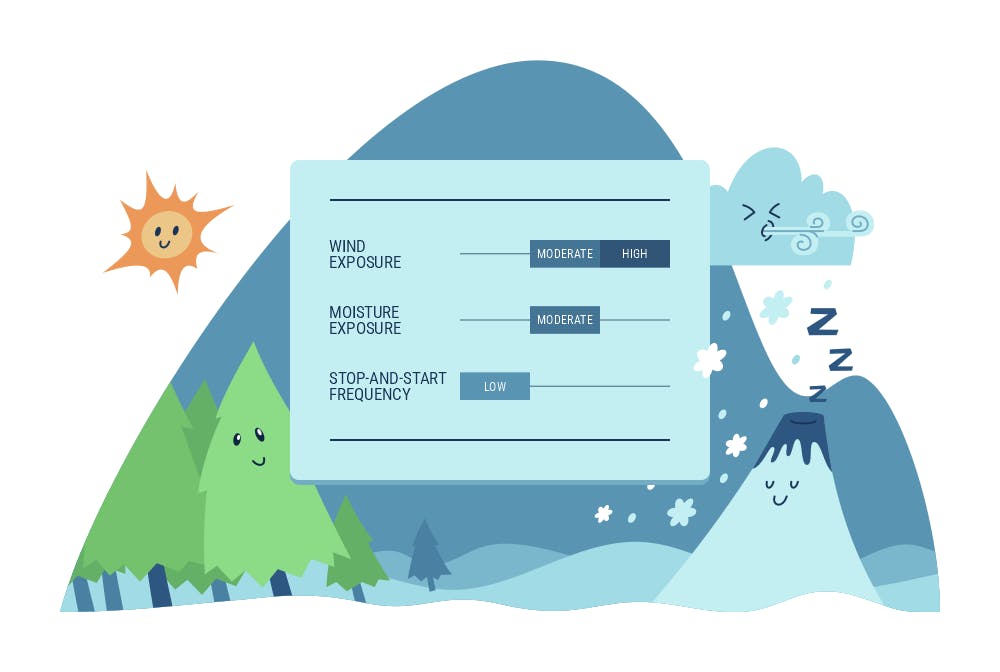
Icewear insight: Flexible layering matters more than maximum warmth.
Winter sports with variable and “stop-start” movement#
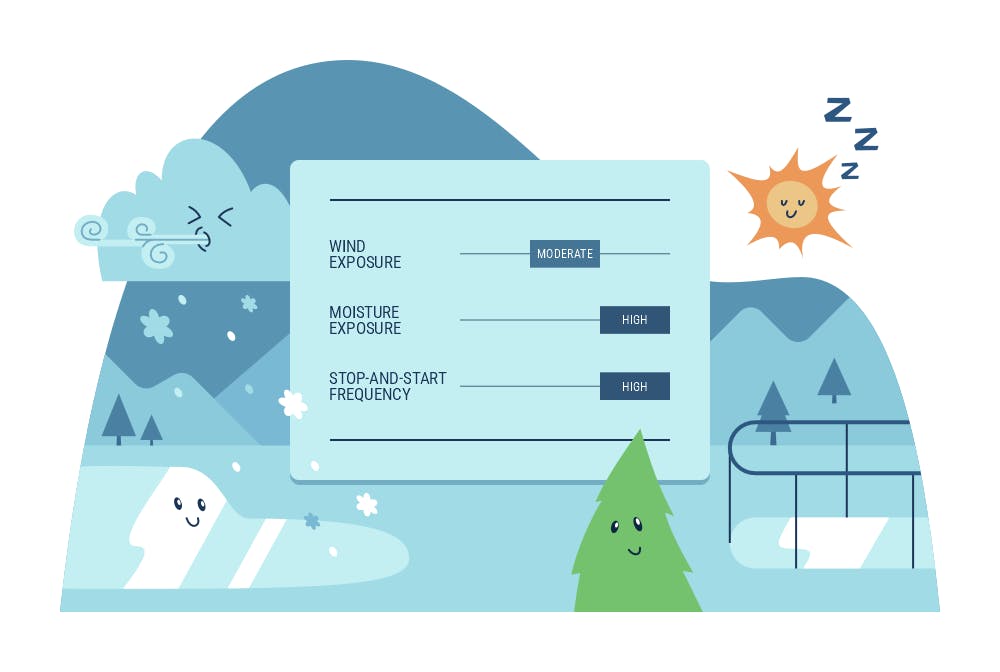
These are the winter sports defined by sharp contrasts in movement, from bursts of effort to total stillness, elevation changes, waiting turns, or sitting down. This is where winter sports become deceptively challenging from a clothing perspective. Heat builds quickly during exertion, but then it disappears when movement stops due to increased radiation and convection. Your body never settles into a steady thermal state, and clothing must perform across extremes.
For these sports, consider dressing for the transitional periods instead of the coldest moments or the most intense efforts.
Downhill skiing#
Downhil, or alpine skiing, takes place on demanding off-piste terrain, backcountry-assisted descents, and fast resort laps. And no matter the environment, runs are broken up with long chairlifts and periods of standing still, which is where heat loss accelerates.
Skiers learn quickly that overdressing for downhill runs leads to discomfort on lifts. The preferred approach is lighter insulation paired with strong wind protection, allowing you to stay warm during rest without overheating during descents.
Downhill skiing takes place on mountains, ski areas, and exposed slopes.
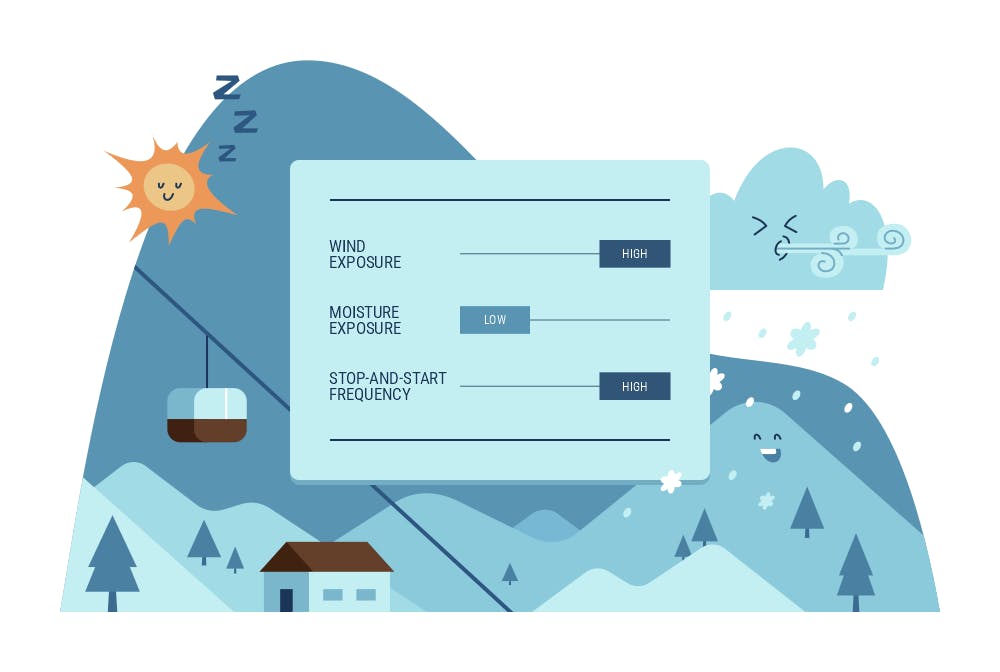
Icewear insight: Shells and adaptable layers outperform heavy insulation.
Snowboarding#
Snowboarding involves short and powerful runs punctuated by frequent stops. Upper-body movement is constant, and direct snow contact is unavoidable.
In Iceland and elsewhere, snowboarders prioritize staying warm while inactive. Sitting down on snow or taking breaks in biting wind quickly exposes any weaknesses in insulation or materials, making moisture resistance and warmth retention essential features of all clothing for this sport.
Snowboarding takes place on mountains, terrain parks, and open slopes.

Icewear insight: Staying warm while stationary is as important as range of movement and wind-protection performance while riding.
Outdoor ice hockey#
Outdoor ice hockey is simultaneously explosive and intermittent. Even in cold air, players sweat heavily, and that moisture becomes a liability whenever a play stops.
Gear and clothing for outdoor hockey are the “proof of concept” for players learning moisture and evaporation management. You discover early that staying dry matters more than staying heavily insulated.
Outdoor ice hockey takes place at outdoor rinks and on frozen lakes.
Icewear insight: Fast-drying, temperature-regulating layers are essential between shifts.
Terrain-driven winter sports with technical movement#
You’ve arrived to the winter sports section where terrain and technical movement matter most. These sports take place everywhere from glacier tops to volcanic trails. Movement is deliberate and usually slow, and you make frequent pauses to assess footing. Your winter clothing has to allow for a full range of motion while maintaining comfortable temperatures on the move and during stops.
In Iceland, terrain-driven winter sports are treated with awe and humility. Winter weather conditions change quickly, and clothing systems are chosen for their ability to adapt without requiring more or longer stops.
Winter hiking#
Winter hiking includes packed snow trails, volcanic terrain, and multi-day adventures. Your effort fluctuates with the topography, and weather exposure can shift fast.
When you pack for winter hiking, your layers have to stretch, breathe, and protect you against sudden wind or precipitation without restricting movement. Icewear’s clothing for hiking is designed to meet all these needs.
Winter hiking takes place on icy trails, volcanic terrain, and with elevation changes.

Icewear insight: Dressing for terrain matters more than dressing for temperature alone.
Mountaineering and glacier travel#
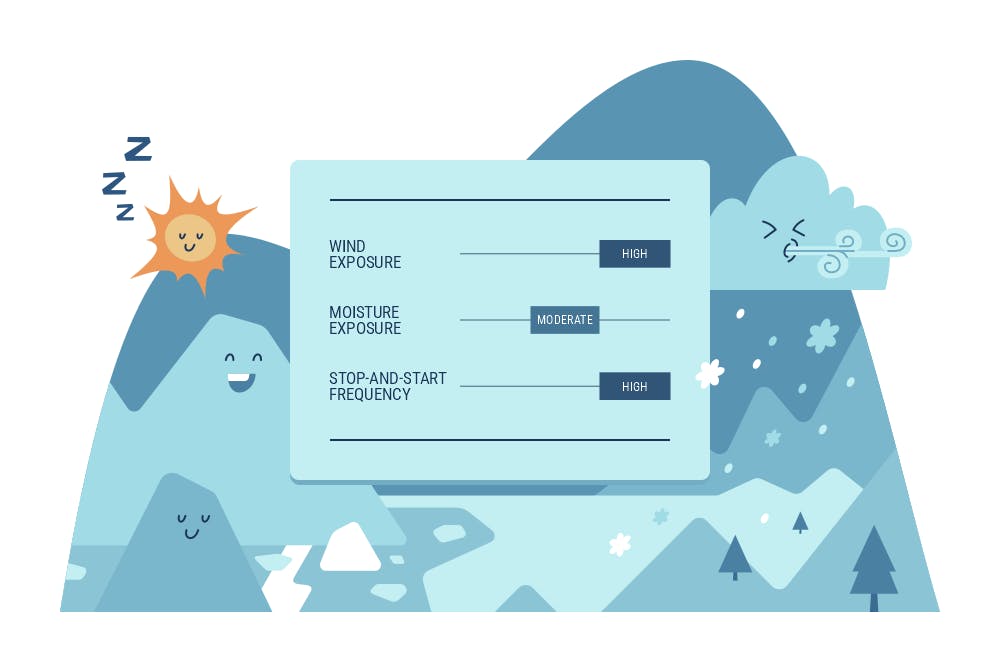
Mountaineering and glacier travel are slow and technical, highly exposed to the elements. You’ll have long periods of low-intensity movement, and even those are interrupted by stops for navigation or safety. Moisture is a constant factor, but not from sweat as much as from changing precipitation.
Glacier guides in Iceland rely on layering systems that have been refined through centuries of experience. Clothing is chosen for stability over time so you can maintain warmth without sacrificing movement or safety.
Mountaineering and glacier travel take place on glaciers in high-altitude zones.
Icewear insight: Thermal stability and adaptability are critical for safety.
Everyday winter sports#
Finally, these are the winter activities we know and love best. For each, the focus is comfort and warmth—and performance takes the passenger seat (important though it still is).
Everyday winter sports are often underestimated, but they do present real challenges. For example, regular stops, sitting in snow, and uneven activity levels between participants mean that planning has to be multi-faceted. Clothing has to be adaptable for a wide range of needs, movements, and people.
Sledding and tobogganing#
Sledding includes short bursts of movement that cut against the wind, followed by a second burst running up a hill, followed by periods of waiting or sitting on snow and ice. Heat is lost quickly between runs, especially for children.
Sledding is a rite of passage in childhood, and parents learn early that staying warm during inactivity is what keeps the experience enjoyable (for everyone).
Sledding takes place on hills in parks and residential areas.

Icewear insight: Warmth during rest is what determines how long play lasts.
Casual ice skating#
Casual skating is social and relaxed. You’ll make pauses to talk, rest, and watch others. Standing still on the ice will expose your body to rapid heat loss, so you’ll have to think ahead about how to dress.
Casual ice skating takes place on outdoor rinks and frozen ponds.

Icewear insight: Dressing for the breaks in movement keeps the experience enjoyable.
How to experience your favorite winter sports#
Winter sports reward preparation in ways no other season does. When you dress for how your body actually moves, you unlock confidence. That’s the difference between enduring winter and experiencing it.
This winter sports guide is meant to help you recognize yourself in the right movement patterns and places. Once you understand the relationship between movement, environment, and your sport of choice, choosing how to dress becomes intuitive.
Materials and layers#
At its core, dressing for your favorite winter sport is about controlling how heat moves between your body and the environment. Comfort is governed by the same four forces: conduction, convection, radiation, and evaporation. The role of your clothing is to manage those forces, and that requires knowing which materials react in what way to heat.
A proper cold-weather system requires knowing how to layer correctly, too. The key is adaptability. Layers should be easy to add or remove, and they must be breathable enough to prevent sweat buildup. For winter sports, they also need to be flexible enough to support natural movement.
Find your favorite winter sport, and dress for the reality of it.
More blog posts
March 2026
Hot and cold therapy index
New study by Icewear uncovers the world’s best hot and cold therapy destinations and ranks the best in a must-see index.
Read more
March 2026
The most overrated and underrated natural wonders
Which natural wonders live up to the hype? We analyzed visitor reviews to rank the world's most underrated and overrated natural wonders, from Iceland's hidden canyons to Chile's breathtaking Marble Cathedral.
Read more
March 2026
Everything you need to start to knit: beginner knitting ideas, tools, and more
A basic knitting kit is required to get started. Knitting kits for adults can be budget-friendly since just a few items are required.
Read more